
“Picture a pasture open to all. It is to be expected that each herdsman will try to keep as many cattle as possible on the commons. . . .
As a rational being, each herdsman seeks to maximize his gain. Explicitly or implicitly, more or less consciously, he asks, “What is the utility to me of adding one more animal to my herd?” This utility has one negative and one positive component.
1) The positive component is a function of the increment of one animal. Since the herdsman receives all the proceeds from the sale of the additional animal, the positive utility is nearly +1.
2) The negative component is a function of the additional overgrazing created by one more animal. Since, however, the effects of overgrazing are shared by all the herdsmen, the negative utility for any particular decision-making herdsman is only a fraction of −1.
Adding together the component partial utilities, the rational herdsman concludes that the only sensible course for him to pursue is to add another animal to his herd. And another; and another. . . . But this is the conclusion reached by each and every rational herdsman sharing a commons. Therein is the tragedy. Each man is locked into a system that compels him to increase his herd without limit—in a world that is limited.”
Garrett Hardin, 1968
^Blimey, pretty bleak start right? (promise there’s a potential happy ending to this one though!). The notion that the logical human brain in full function will always favour overexploitation given the consequences are shared with other ‘victims’ in an open access space – not a comforting thought. This theory was coined by Hardin, an ecologist who first published it in his famous paper ‘The Tragedy of the commons’ (Hardin, 1968). It represented the culmination of his studies in competition theory in economics and biology. But…he was also a listed white nationalist and known Islamaphobe (Mildenberger, 2019) who proposed ‘lifeboat ethics’ – we’ll get to this later…
Nonetheless this theory continues to be quoted frequently and is arguably the fundamental epicentre to our hyper-speed capitalist model that is followed by the majority of the globe. You can relate this to classism too – the concept that wealth is finite and the exploitation of the worker bees means the 1% queens of the colony are rolling in the money (honey). But does the theory stand the test of time? Looking back, what about before we had mass consumerism and markets were truly local? And looking forward, is this theory of ‘tragedy’ valid? Let’s roll up our sleeves and test those questions out, looking at some potential validations as well as contradictions of Hardin’s theory. Seriously though, the answer to this debate you and I are going to engage in throughout this blog is what I feel is truly going to define the outcome of our future – tragedy or triumph?

Tragedy of the commons in motion
To make the theory a little more real, I’m going to pick some possible applications where we see it playing out in real life, starting small, ending big (as any good Adele song does):
Illegal wildlife trade
Poaching is a catastrophic issue, with the illegal wildlife trade estimated to cause the extinction of a tear-inducing 30,000 species a year (Lai, 2022). We know the rationale for such revolves around the animals being 1. sold as pets (in the last 30 years over a million African Grey Parrots have been illegally removed for the purpose of pet trafficking – Soomro, 2019) , 2. food sources (shark finning for the popular Oriental fin soup) and 3. decoration (the ivory black market being the most notorious).
Studies tell us that most poaching activity is ‘opportunistic’ and conducted by locals which then later trade with the larger organised crime entities (Pires, 2011). Their motivation is, of course, to sustain their livelihood through the exploitation of the ‘open access’ animal kingdom. Open access is in parentheses here as, from a legal standpoint, this isn’t the case as often bans are in place, but these prove largely ineffective as there is still a physical open access (i.e. a local can, perhaps evading barriers, gain access to the wildlife they look to poach). Continuing with this poaching activity provides the locals with economic gain, whilst others in the ‘commons’ experience the consequences through the overexploitation and eventual collapse of a species, perhaps even an ecosystem.
Climate change/ pollution
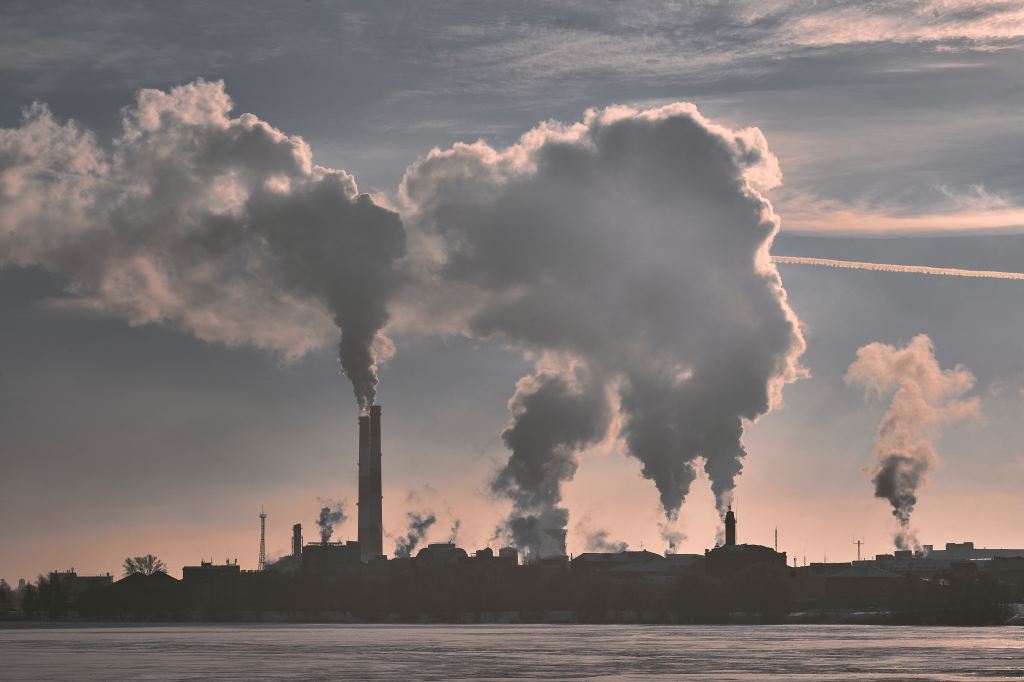
This is a little less tangible than the above because it is applied at a global scale, but the common space here is the atmosphere, which we all have access to (O’Gorman, 2010). It isn’t really privatised in how we use it beyond piddly flight-paths, so access is open (tragedy theory tick), and the levels by which an atmosphere can sustain life are ‘finite’ i.e. the greenhouse gases and their atmospheric concentration (also tick).
Just as the herdsman reflects on the possibility of overgrazing when they consider adding another cattle member to their herd, so too do humans when they now think about their consumer, corporate and governmental decisions on global warming. And economic gains win out – the person in the supermarket will choose the cheaper option over the more expensive greener option (ok yes, this is changing, but it’s not the majority by a long way, especially in a cost of living crisis) and an organisation will tend to favour changes to support greater shareholder gains as opposed to more expensive, decarbonising solutions (also changing – slowly – but is still absolutely valid in the masses).
So, without knowing it, the tragedy of the commons theoretically drives our individual choices which, in turn, have collective impacts – anything else coming to mind here…?
The pandemic
Boom – another application for Hardin. The ‘tragedy of the commons’ reared its ugly head in a few ways as we experienced the harsh, fatal realities of COVID-19 on national and global scales. Firstly, a very obvious one was in the mass stockpiling that occurred (Dwyer, 2020). Open access to commodities with finite supermarket inventory (god forbid your local ran out of loo roll) meant selfish gains were had through piling up the trolley full of these resources, and this behaviour even continued in light of knowing those more vulnerable needed access to these items and suffered moreso. Ok, what about on a larger scale? Well the R rate could be seen as a ‘finite resource’ i.e. if it went up too much, it would mean tighter regulations and, of course, more fatalities from the increased spread. But what happened? Many individuals continued to flout the disciplines to reduce the R rate (Matt Hancock we’re still looking at you. Oh and you and your parties Boris) so they could individually experience the ‘gain’ of doing things that contented them. Many still continued to go to visit others beyond their household – and be honest – how many of you piled up your car and zoomed off to your parents/ sisters/ in-laws as soon as BJ announced the Christmas lockdown would be in place the day after? (no judgement here).
Just one more final point – global stockpiling by governments – PPE, vaccinations and more. Over.
A positive stance? Against Hardin’s tragedy by turning it into triumph
Fortunately (phew, finally Soph!), I, alongside other much more worthy critics, see some large holes in Hardin’s theory. So what are these gaps then?
The missing ‘peace’ – governance
You clever people were probably reading my above and criticising – which, if you did, fantastic – I did it on purpose (honestly). Regulations and centralised governance are put in place to ensure we don’t overexploit the resources we have, otherwise, open access to. We’ve seen or are seeing that for all of the above examples. Elinor Ostrom won a Nobel prize for her work disproving Hardin’s theory through several field studies, findings showing that people in small, local communities manage shared natural resources over time through the evolution of rules towards greater sustainability (Williamson, 2023). Therefore, abuse of resources occurs when the institutions that are in place for rule-making have not evolved enough to have substantial impact.
Never is Ostrom’s point made more clearly than in the case of the Indigenous Peoples of the past, present and future. In the historical version of the ‘commons’, “social and natural ecology were interwoven” (Menzies, 2014), and a ‘commoning’ was a convening of the local community to discuss fair and sustainable ways of living off of the land. It became a known part of our evolutionary DNA that we applied a collective, altruistic view in order to have long-term success, that our ancestors understood a ‘you scratch my back, I scratch yours’ approach enabled us to continue on for generational temporal scales.
But that’s all well and good for local community scales, what about global!? – I hear you cry. Getting there shortly, bare with.
Technology
Countless times humans have come up with brilliant inventions that have enabled us to, literally, open up additional resources, challenging a key assumption Hardin had which was that resources were ‘finite’. When a species can no longer sustain itself through the presence of essential resources – think food, water, temperature – it reaches its carrying capacity, and therefore numbers start to decline (Bradshaw, 2019). But the human race continues to challenge this, literally inventing ways to travel across oceans to extend the number of land-based resources available. You can of course find other good examples of this too – did someone say lab-grown meat? What this means is that, through technology, humans seem to mimic core aspects of a sustainable, cyclical ecosystem – producer > consumer > decomposer > back to producer. Which leads me to my next point:
Biological theory – circular economies
Countless examples of finely balanced ecosystems rely on cycling of resources through their chains in order to enable resilient, long lived species. My previous piece on all things coral reefs is one of these examples. So, debunking once more the point that resources are finite (take that Hardin) when studying ecology it is very natural for resources to be evergreen, technology or not. Therefore, just as our economic models have taken root from evolutionary concepts of natural selection and the need for a layered ecosystem of start-scale-medium-large enterprise, can this not extend to cyclical resource use too? We are already seeing the emergence of green business models; we are evolving backwards to go forwards – away from a linear society towards a circular one.
A final thought – population growth
The thing is though, whilst I absolutely back the 3 points above (I’m a tech optimist after all, just call my Marcia Zuckerberg) there is a pre-requisite to all of them, and that’s size. In this context at least, it matters. The population has grown exponentially alongside rapid rising living standards in the global North, going from 3 billion to 5 billion in less than 30 years (1960-1987 – World Bank, 2019) and is predicted to go to over the 9 billion mark by 2050. Whilst cyclical models occur naturally in the wild, there is a governing size principle that is well understood – a negative correlation between body size and abundance (Blackburn, 1996). In other words the bigger the organism, the smaller the abundance. For all the Shark Week fans, here’s an analogy for how this balance plays out:
- Sea producers (algae, kelp etc.) are abundant in nature, and lower in nutrients, so marine ‘herbivores’ eat lots of them
- At the next ‘trophic’ layer (step in the food chain) this nutrients is passed on, so that small ‘vegetarian’ crustacean is more nutritious and passes that on to its predators, the meal for a lot of reef fish
- The reef fish are tasty morsels for bigger fish, such as one of my favourites, the Lion Fish
- And so on, until you get up to the big’uns – the apex predators – the sharks.
At each trophic layer above, you will likely see size increase as you go ‘up’ the chain A natural pyramid occurs – if there are too many sharks, there won’t be enough food to go around – and so abundance declines back to a threshold limit – and this effects rebounds down the pyramid too (if there are too many lion fish there won’t be enough reef fish and will then equal a decline in lion fish back to the pyramid structure).
So why am I banging on about this? Two reasons:
- We are the ultimate apex predator, and although we aren’t one of the ‘biggest’ on the planet, we are still considered large-sized organisms and we’ve managed to supersize ourselves through the use of technology too (our fishing boat avatars are pretty deadly). We are also pretty abundant as the World Bank shows us – we are defying the natural pyramid law, and ecological examples tell us that eventually this will lead to a decline in abundance. What I am saying here, to speak directly and in not-so-scientifc and polite language is food/ water security will be (and already is) compromised, leading to malnutrition and death (a tragedy taking place for many in developing countries right now). Does that mean we are partakers in Hardin’s ‘lifeboat ethics’, where finite resources means we should privatise (stake our claim over resources that were once shared) and also throw people overboard? I appreciate this is an uncomfortable and sensitive subject but it’s one that needs to be discussed explicitly.
- Ostrim’s studies revealed that local level community governance enabled sustainable resource use. It was enabled by a smaller surface area of monitoring ‘supply and demand’ and natural communication/ governance mechanism efficiencies across smaller numbers (take a look at Dunbar’s law for this). We see this play out right now with inefficient international governance mechanisms related to net zero – there is no way to enforce these targets, only to advise. Does this call for market localisation to overcome these challenges? The jury is out in my head on this one, and a future blog post to come on this topic alone.

Wrapping up…
So fellow sheepherders, what has the above taught us? We’ve understood Hardin’s tragic notion of exploiting resources that are otherwise open access for logical economic gains. But we’ve also Ostrim’s theories that we evolved abilities to govern ‘the commons’ for long-term sustainability – collective benefit = individual longevity. I’m purposefully not going to give a black and white conclusion to the above as I’d like to not influence your interpretations (and love to hear your thoughts). What I will mention though is, through globalisation and population growth, we’ve lost that connection to the ‘commons’ leading us towards overexploitation. So – Ostrim or Hardin? Scratch my back I scratch yours, or stab in the back instead? I remain hopeful on this one; in our invention of institutions, technology and economic circularity. We can be pretty ingenious little spuds sometimes – that’s if the BJs of the world don’t get in the way of it…!
References:
- Mildenberger, M. ‘The tragedy of the tragedy of the commons’, Scientific American 2019.
- Pires, S.F. and W.D. Moreto ‘Preventing wildlife crimes: Solutions that can overcome the ‘tragedy of the commons’, European Journal on Criminal Policy and Research 17 2011, pp.101–123.
- Lai, O. ‘Biodiversity loss and definition and examples’, Earth.org (2022).
- Soomro, A, ‘8+ Most Shocking Illegal Pet Trade Facts’, Environment Buddy. Available here.
- O’Gorman, M, ‘Global Warming: A Tragedy of the Commons’, Osgoode Hall Law (2010). Available here
- Dwyer, C., ‘What COVID-19 Tells Us About the Tragedy of the Commons’, Psychology Today (2020). Available here
- Williamson, O, ‘Elinor Ostrom – Facts. NobelPrize.org.’, Nobel Prize Outreach AB (2023). Available here
- Menzies, H. Reclaiming the commons for the common good. (Gabriola: New Society Publishers, 2014.).
- Blackburn, T., M., ‘Abundance-Body Size Relationships: The Area You Census Tells You More’, Oikos (1996) pp. 303-309.


 The Colour Green
Leave a reply to jamyriahdunderman83 Cancel reply