
Prologue – ‘The green products evolution’
As I’m into product and sustainability, it felt like a great idea to focus on the intersects of the two and cover a series of posts on what trends there are now and on the horizon, shaping how products and services will change in the green evolution. Don’t worry, it won’t be ‘Married at First Sight’ or ‘Love Island’ series length/ time commitment – god, what is – but probably* no more than a 5 parter covering the producer (companies), the regulator (governments, NGOs etc.) and the consumer (Joe/Joanna blogs) contributions to tackling the sustainability challenge. I’ll flag now these are slightly off topic from my direct Masters course so will be a tad less academic in nature, but I’ll of course draw on source readings throughout so it’s not just me monologuing thoughts.
*’probably’ because I’d like to retain artistic licence should I want more or less thank you very much.
Out of the 17 Sustainable Development Goals, the most relevant one to double click on here is 12: Sustainable consumption and production, which holistically looks not just at how producers design, economically model, manufacture and distribute their wares, but the ‘demand side’ behaviours – the rate at which we are consuming and producing waste (United Nations, 2023). In the disposal and end of life product stages, the responsibility is shifting – arguably from government to the producers themselves. This is where we’ll start – at the end – which yes when you read that I’m sure it feels nonsensical, but I assure you folks I’ve got a plan. So get into a comfortable, scroll reader position, and let’s kick off episode 1:
Episode 1: Not just the kitchen but the whole enchilada – Extended Producer Responsibility
Hola amigos – now I’ve got your attention with the mention of spicy mexican food, let’s seamlessly segway into defining what extended Producer Responsibility is.
I like the the Organization for Economic Cooperation and Development (OECD) definition best for Extended Producer Responsibility, or EPR, which they state as:
“an environmental policy approach in which a producers’ responsibility for a product is extended to the post-consumer stage of a products life cycle including its final disposal” (Nnorom, 2008)
So, if I’m a producer of that delicious enchilada, it doesn’t just mean I should only worry about what I do before it leaves my kitchen – like how I source the ingredients and what I do with them whilst ‘enchiladafying’ them (I’m sure that’s a word) – but what happens next once the consumer buys it from me. So, keeping on with the analogy, this could mean how the enchilada is treated (if it’s stored or further cooked) and how its waste is then collected and either cycled back or disposed of.
But EPR is quite a recent ‘thing’ – traditional approaches focus predominantly on ‘end of pipe’ point solutions so the financial costs of this are absorbed by the municipality in which the waste has been discarded. However, that’s neither fair nor strategic, after all we know the proverbial best way of clearing up a leak is turning off the tap (sigh, that old chestnut). And, in fact more pressing, that tap keeps on gushing faster and faster in our hyperspeed capitalist market of now, with facts demonstrating that waste rate is speeding up too, with annual waste figures expected to increase by 73% from 2020 levels to 3.88 billion tonnes in 2050 (The World Bank, 2022).
Now, you might be scratching your head at that last point – how is EPR ‘turning off the tap’ when it is ‘extended to the post-consumer stage’ as the OECD says above? Well, by placing greater producer accountability for downstream it incentivises change upstream, given it will be less costly to just design the product ‘green’ in the first place, thereby reducing costs of the companies to treat and safely dispose of it (Walls, 2006). From a legislative principle, it promotes the most impactful change as laid out in the waste hierarchy whilst also ensuring that benefits/ costs are redirected to the producer – ‘the polluter pays principle’ at work indeed.
So now you’ve had a taste of EPR, let’s sink our teeth on the types of EPR approaches, explore some real life emerging examples and understand the current limitations with this legislation area that needs ‘turning up the chilli heat’ to supercharge EPR efficiency as a governing tool.

Types of EPR (Nnorom, 2008)
What different legal flavours of enchilada are there? Quite a few actually:
Liability – Responsibility for proven environmental damages caused by the product. The extent of the liability is determined by the legislation and could zone in on different stages of the product lifecycle. Arguably ‘point’ damages (pollution that occurs from a single identifiable source, NOAA) will be easier to classify than diffuse damage (pollution that is indirectly released i.e. ‘runs off’ to other areas from its original source). Easier to quantify damage of an oil spill in the ocean, for example, versus the damage of fertiliser gradually leaching into agricultural soil, and then running into riverways before it is then dispersed into the ocean.
Economic responsibility – this means a producer might cover all or part of the expenses, for example, for the collection, recycling or disposal of their products. These expenses could be paid directly by the producer or by a special fee. This, in action, is the costs a fashion brand might have for paying an organisation to install and collect from designated bins their consumers can return second hand clothes to.
Physical responsibility – Producers are involved in the physical management of the products/ their effects. This could mean developing any necessary technology, to managing the total collection, management and disposal of the products. For example, a car manufacturer may directly oversee how their second hand car exchanges are carried out: collections from their dealerships OR arranged collections > re-marketing as is OR recycling in their designated recycling centres to raw materials to be reused > manufacturing into new models OR selling on these waste streams as they are to others for their production. These are more popularly named as ‘take back’ schemes.
Ownership – (I find this flavour the most interesting in how it could play out). Producers may retain the ownership of the products throughout their life cycle. So all environmental and physical responsibility goes back to the producer, almost as though the product is a rental by the consumer, in which the consumers purchase the ‘use’ of the product, but isn’t responsible for any damages it may cause during use. Easiest way to think about this is electronic goods (Apple…or Samsung for those users out there who made the wrong decision). These products usually are directly linked back to the manufacturer given how dangerous such poor disposal of waste could be (lead poisoning is fatal and is largely present in many of our appliances/ electronics) and also because the treatment of this waste requires specialised facilities/ processes.
Informative responsibility – (last one!) the producer is responsible for providing information about the product and any associated impacts it causes across its lifecycle. The focus of this is two fold:
1. To notify the consumers of how the product should be handled or recycled and
2. To reduce barriers, logistic or financial, for 3rd parties in post-consumer recycling
The Enchilada Leakage; limitations of EPR
You know those enchiladas that are a bit messy when you bite into them? Course you do. Well EPR is no different, I’d argue still very much in its infancy in terms of making sure policy development is err…watertight…in ensuring it meets its objectives to encourage producers to implement sustainable choices throughout their product lifecycle. There are a few issues that have surfaced already or points I have independently come to from my readings on the legislation. Here’s 3 of them:
1. International leaks.
Should there be imposed taxes and fees applied for recycling and disposal of product waste, there’s a fear that companies will look for the cheaper options – which more often than not lie beyond their domestic boundaries. Now offshoring is nothing new generally, but it’s got a darker, colonial association when it comes to recycling and waste treatment (i.e. transporting abroad knowing that there are inadequate facilities in place to safely handle waste materials). We see this in China’s waste ban of 2019 (Franklin-Wallis, 2023) whereby this closing of the gates used by the world for international waste trade meant these were dispersed to other developing south East-Asian countries whom had inadequate facilities to both process the sheer volume or inadequate policies to ensure health and safe conditions surrounding these facilities.
Luckily, international agreements like the Basel Convention are focusing on hammering out this offshoring waste behaviour. According to Sonak (2008) ‘A central goal of this is to end NorthSouth trade in hazardous waste. Under the Basel Convention, exporting nations and polluting industries have to take care of their own toxic waste.’ Whilst the real priority for this convention is on toxicity, ultimately the shift in disposal/ recycling approaches are orienting towards local operations as a trend in general, which is a positive step in ensuring the sources of the waste are the ones that address it.
2. Consumer pays?
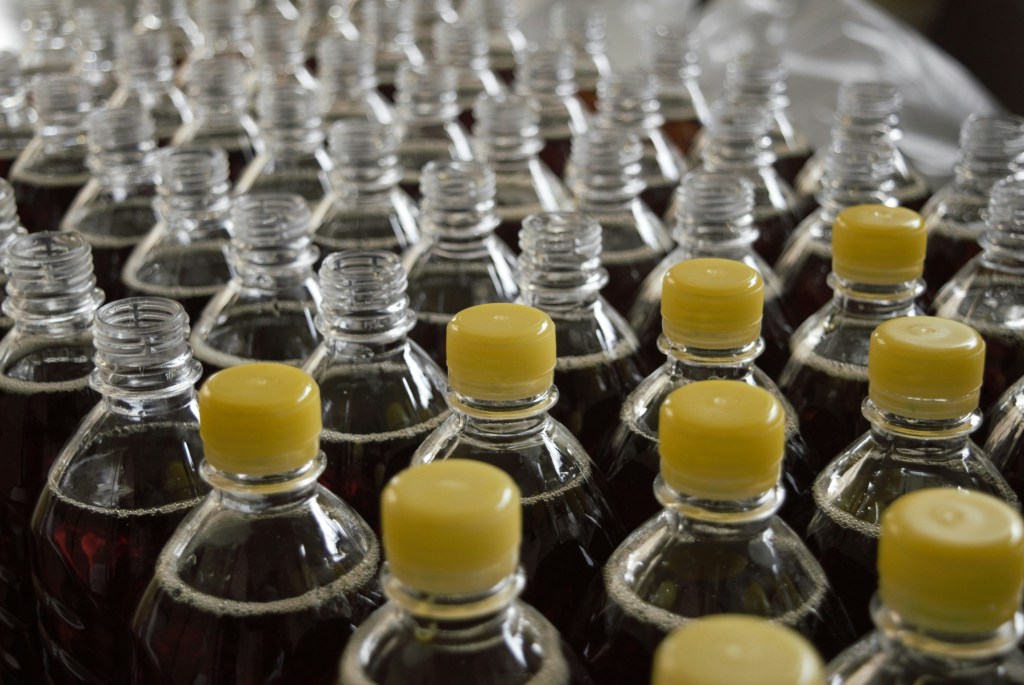
As with countless other examples, taxes and fees incurred by the producer are offset onto their consumers, which, if tolerated by the consumer, don’t incentivise any transformative change in how they produce and manage their products. An example of this is plastic bottle return schemes (long awaited in the UK I might add, but coming this year eeek! – Laville, 2023). Whilst they act as fantastic incentives for consumers, given they have an additional bump to the cost of their product at point of purchase which is then compensated when they return it to a designated bin, it doesn’t alter how the product is designed in the first place. Now if there was a financial cost directly incurred to the producer as part of this scheme, perhaps they would speed up their transition plans to alternate biodegradable sources…food for thought.
3. Dodgy behaviours.
Ok, I know this one should have a better title, but essentially it covers a general point that, if penalties incurred in disposal/ collection represent an ‘intolerable’ barrier to either the consumer or the producer, it may lead to even worse behaviour that causes greater ecological harm. An example would be ‘pay as you throw’ schemes leading people to illegally dump items – we’ve all seen a random fridge at the side of the road right? Or producers not being as forthright and transparent with their data on waste mass which might dictate how much they might be taxed, if the EPR model applied is ‘fees on disposal’ (Nnorom, 2008)
All of the above are absolutely in the gift of the policymaker to respond to and there will always be side effects, but require systems thinking and a good level of analysis to ensure the probability of these occurring do not outweigh the benefits.

Wrapping up…
So what’s our food critic’s review of EPR? Do we think it has enough spice to shake things up or one of those menu items that just doesn’t hit it? Will it shift focus into the actual change needed earlier in the production process (and of course tidy up the disposal bits and pieces) or will we largely get a shifting of the problem to other areas in the pipe?
From a time perspective, I mentioned previously that EPR is in its infancy, albeit the first instance of it was in 1991 in Germany (Nnorom, 2008) and so it is taking its time to permeate the public sector and translate into directives for organisations to comply with. In the UK there was excitement around updated UK EPR legislation announced in 2021 following our Glasgow COP26 to be acted in 2023, but this has been delayed until at least late this year (DEFRA, 2024). That being said, EPR has so many opportunities given the right scrutiny applied around the policymaking tables so does require time to ‘get right’, responding to their given markets through EPR schemes ‘reducing material use in production, redesigning products to be more recyclable, consuming less, and recycling more’ (Walls, 2006).
My high level two cents? I think it’s legislation like this, whether its watertight or not, that will put the right level of pressure on the private sector to build green as well as take on the expense for their related product waste. The models ensure that, in one way or another, the producers are closely connected and responsible for the ‘decomposition’ not just the production, and that tie in itself will rebound up the product lifecycle should the relative financial incentives be in place. And in many cases businesses are looking for just this – the economic sense to justify to shareholders the investment in greener product initiatives, as opposed to being an early adopter but taking a financial hit in the process which is not felt by other competitors that are shirking their green product opportunities. So yes, EPR legislation is yet to really have a strong track record for us to pass judgement, but I’m ending this one ‘hungry for more’ (sorry, had to be done) and excited to see the product innovation such governance will inspire.
Sources:
- United Nations, ‘Goal 12: Ensure sustainable consumption and production patterns’, 2023. Available here
- Zanjirani-Farahani, R., Asgari, N., Van Wassenhove, L.N., ‘Fast Fashion, Charities, and the Circular Economy: Challenges for Operations Management’, Production and Operations Management Society, 31 (3) 2022, pp. 1089–1114. Available here
- Nnorom, I.C. and O. Osibanjo ‘Overview of electronic waste (e-waste) management practices and legislations, and their poor applications in the developing countries’, Resources, conservation and recycling 52(6) 2008, pp.843–858.
- Walls, ‘Extended Producer Responsibility and Product Design’, Economic Theory and Selected Case Studies (2006). Available here
- NOAA, ‘Point Source’, available here
- DEFRA, ‘Extended producer responsibility for packaging: who is affected and what to do’, Gov.UK (2024). Available here
- Laville, S., ‘Plastic bottle deposit return scheme finally looks set to start in England’, Guardian (2023). Available here
- The World Bank, ‘Solid Waste Management’ (2019). Available here
- Sonak, S., M. Sonak and A. Giriyan ‘Shipping hazardous waste: implications for economically developing countries’, International environmental agreements: politics, law and economics 8(2) 2008, pp.143–159.
- Franklin-Wallis, O., ‘Wasteland; The dirty truth about what we throw away. Where it goes and why it matters’, 2023.
- European Commission, ‘Trade Barriers’, 2017. Available here
 The Colour Green
Leave a comment