
“Practically the whole world depends on coral reefs, so if the coral reefs get all killed, then the ocean will start going out of whack, and if the ocean goes out of whack, something might happen on land.”
Alexander Gould, Voice of Nemo (Finding Nemo)

“911 Operator, what’s your emergency?”
“HELP, I NEED TO FIND OUT WHAT’S GOING ON WITH CORAL REEFS AND WHAT WE CAN DO TO SAVE THEM NOOOOOOWWWW!!!”
Ok, so you probably shouldn’t call your emergency services to ask them this question (unless you want a hefty fine and an intensive psychological assessment), but I’m hoping this blog will be a better way to get answers to the capitalised outcry you, no doubt, internally shouted above.
I think we all know that coral reef ecosystems are extremely significant for our marine life, but perhaps not just how significant. Despite only covering 1% of the ocean floor they provide support to around ¼ of all life in our oceans at any one point in their lifecycles (NOAA, 2019). Whether that be as nurseries for Nemos, feeding sources for bacteria from the corals which in turn supply entire ecosystems, hiding places from predators – you name it, reefs probably do it and have the aquatic t-shirt. And these ecosystems that they support are built on a myriad of symbiotic relationships, literally giving and receiving nutrients across the trophic stages of the food chain so that there is a beautiful organic recycling process in place, perfectly in balance, no binman needed. And the importance of coral reefs doesn’t just lie below the surface; 500 million people are estimated to rely on coral reefs globally (Ngoc, 2019), enabling livelihood and food security for many. So now that I’ve bigged up reefs, hopefully i’ve convinced you to read on and learn more about how they work and why they are severely under threat. And by now you probably know I’m a cynic, but I use ‘severely’ as an understatement here – in the coming decades projections are for as much as 99% reef coverage to be lost if we don’t limit warming to 1.5 degrees (IPCC, 2018) which is the aim of the Paris Agreement – imagine. that.
Right, masks and fins on friends, let’s ‘dive’ down into the corals – their functions, threats and possible CPR approaches we can take should we answer their distress call.
So how do coral reefs actually ‘work’?
Will try to cover the absolute essentials here at ambulance speeds:
First, its important to distinguish the ‘types’ of coral you get at a high level, and we can approach that in two ways. Firstly there are tropical coral reefs, which most of us will be familiar with, in fact the common assumption is reefs need to be in tropical conditions in order to exist, usually thriving closer to the ocean surface due to photosynthesis (pause, come back to this later). BUT there also exists cold coral reefs, which true to name can grow in colder conditions in much deeper ocean beds (for example, did you know Scotland has significant cold coral reef coverage, over 400m deep? Yes the Scots!) (The Wildlife Trusts).
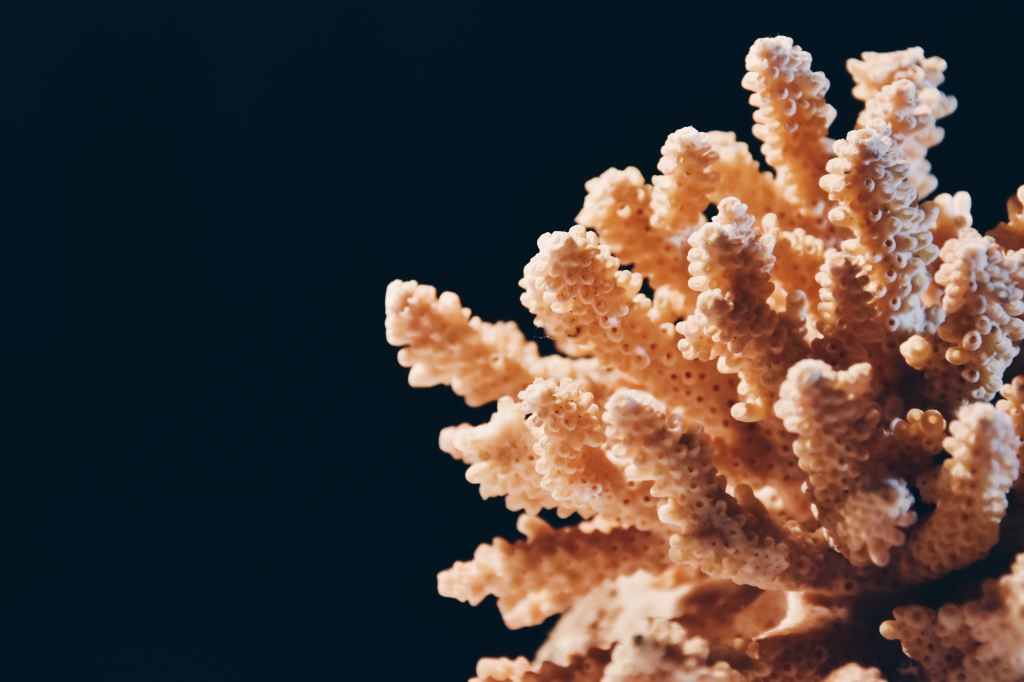
Therefore how they grow differs in response to the levels of sunlight and warmth. Corals are composed of hundreds to hundreds of thousands of ‘polyps’ – tiny animals with tentacle mouths that capture nutrients and help them grow, but depending on whether they are a stony coral or a soft coral, they will either have a hard calcium carbonate shell (stony, sometimes called reef-builder coral) or be soft and move with the ocean currents, similar to plants in the breeze. Stony coral are the ones that aren’t so ‘sexy’ – tending to be colourless due to their skeleton structures – but they are vital to reef systems. Why? Because their skeletons are what soft corals build themselves from as a base, hence why they are called builder. That and because they tend to be HUGE the older they get due to the way in which the skeletons grow over hundreds to thousands of years – yes, reefs literally take that long – is in a vertical layering process (OceanInfo, 2023).
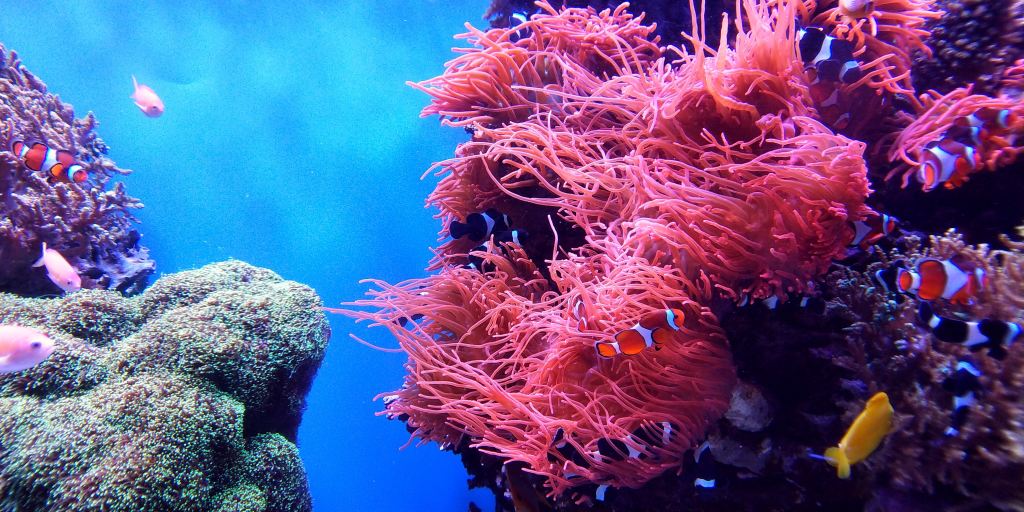
Most polyps harbour algae (called Zooxanthellae – try say that after a night out) and this is one key symbiotic relationship. The algae’s photosynthesis provides additional nutrients as well as supporting the coral to fend off diseases thus enabling greater resilience (NOAA, 2021). They also give corals their awesome psychedelic colours – practical and stylish. And in a perfect quid pro quo, the polyps transfer carbon dioxide and water through their respiration to the zooxanthellae, which they need for photosynthesis. Obviously, with the deeper cold water corals, lack of sunlight means this isn’t the case, so they are adapted to rely on the polyps to take in the nutrients of organic matter (think dead fish and poo sinking down) which is naturally more abundant in deep ocean.
The wider symbiosis comes in the general ecosystem format of producers > consumers > decomposers. Corals here act as the producers, essential for injecting nutrients into the ecosystem through the outputs of their algae harbouring friends, which give away surplus nutrients that the coral simply has too much off. These output nutrients feeds small bacteria, which itself feeds small organisms like zooplankton, which feeds the fish and so on. Nutrients then returns in the form of fish excretion around the reefs, decomposed and returned to the environment for uptake again (Radecker, 2019)
And so, reefs are the literal (sea)bedrock for sustainable, efficient ecosystems of life, which in turn feed ‘us’ in the anthropocene; scientific discovery, recreational tourism (who doesn’t love a reef snorkel?), climate protection acting as barriers between land and storm surges and, of course, fisheries and aquaculture. Therefore, it should be no surprise that the ripples of the coral reef crisis travel far and wide…
Alright, they are pretty cool, so what’s the problem?
Let’s carve up the problem space into two halves (albeit these halves interact with each other, will explain that in just a mo)
1. The Climate Threat
Shocker!! Vastly changing ocean conditions are impacting these delicate symbioses mentioned above, jeapardising reefs that have been growing slowly for thousands of years. A few sub-points to mention here though:
Warming oceans. As we experience global warming at an unprecedented rate, these temperatures cause corals to become ‘distressed’. And it is this distress condition that leads to what many of us know and may have tragically seen if you’ve taken a trip to a reef recently – bleaching. But what is bleaching really? Well, you might be able to decipher this from the clues above…the zooxanthellae i.e. the givers of colour to corals, are expelled by the coral, like a distressed landlord chucking their tenants out on the street (flashback to a fun scenario at uni). And contrary to widespread misinformation, bleached coral doesn’t necessarily mean the coral is ‘dead’, but it normally is a precursor. The coral struggles to provide itself with the nutrients of their algae friend, neither does it have the defences against disease that it once had.
Extreme weather. With climate change comes the increased frequency and intensity of extreme weather events such as cyclones and marine heatwaves. Of course the latter leads to mass bleaching events (like what has happened recently in Florida with soaring water temperatures) and cyclones cause aggressive current surges that literally destroy the corals (saw this recently when I spent some time with the marine biologists on my dives around the barrier reef).
Ocean acidification. The ocean is a fantastic absorber of carbon, a natural carbon sink. However, given we have increased the carbon parts per million (PPM) exponentially since the industrial revolution, the ocean has soaked this up like a sponge. With that increased carbon composition has come a decrease in Ph level, in other words, becoming more acidic in nature (NOAA). Rewind to the earlier point on stony corals and their fantastic calcium carbonate skeleton – calcium carbonate is eroded by acid, and so, in an ocean that is increasingly more and more acidic, it begins to eat away at the reefs faster than they can grow. If that isn’t a sad thought for you, there are other marine critters that rely on calcium carbonate for their bodies, such as clams, oysters, lobsters and more. An acidic ocean means they have a new predator on the scene – their home itself.
2. The Human Threat
Yes, us up in our anthropogenic towers – our actions, whether direct or indirect, are contributing to the coral crisis. The interaction between these is, of course, that humans are also drivers of climate change, so you could argue the ultimate threat to corals is, indeed, us, but it is worth calling out some specific examples in this area:
Destructive fishing. I’ve badged this as ‘destructive’ as I’m using it as a catch all for either how much we are fishing or what fishing techniques we are using. Overfishing in certain areas is drastically altering the ecosystem composition, therefore causing an imbalance to the nutrient loop de loop that corals need to sustain themselves. Where scientists have gathered evidence for the need to claim protected marine areas to enable ecosystem recovery, there remains serious challenges with illegal fishing be that by domestic or international infringers. Also some fishing techniques used are coral killers. For example, dynamite fishing uses explosives to stun or kill fish for quick and easy collection, sacrificing corals in the cross-fire. Alternatively, bottom trawling uses large nets and drags these along the seafloor – again, corals are often damaged in the process. These practices are largely against regulations in place, but enforcement of these across the entire ocean? Yeah, no easy feat.
Chemical pollution. Just when chemical changes felt like enough from carbon absorption from the atmosphere, we have to go and add more into the mix. Run-off from land due largely to things like agricultural and industrial waste (fertilisers etc.) leaks into our soils and waterways, making its not so merry way out to open ocean. This is a SERIOUS problem, causing concentrated areas of hypoxia (little to no oxygen) and (you guessed it) that’s not a good thing for marine life. These aptly named ‘dead zones’ aren’t always man-made as some do naturally occur, but we are rapidly increasing their number and size. To give you an idea of that in the past 50 years scientists have documented 10 in 1960, but at least 169 in 2007 (Costa, 2022). Given oxygen is needed in coral biological processes, reduced levels undoubtedly impact their functioning to the point of decline – and there’s no coral CPR equivalent to breathe life back into the dead zone.
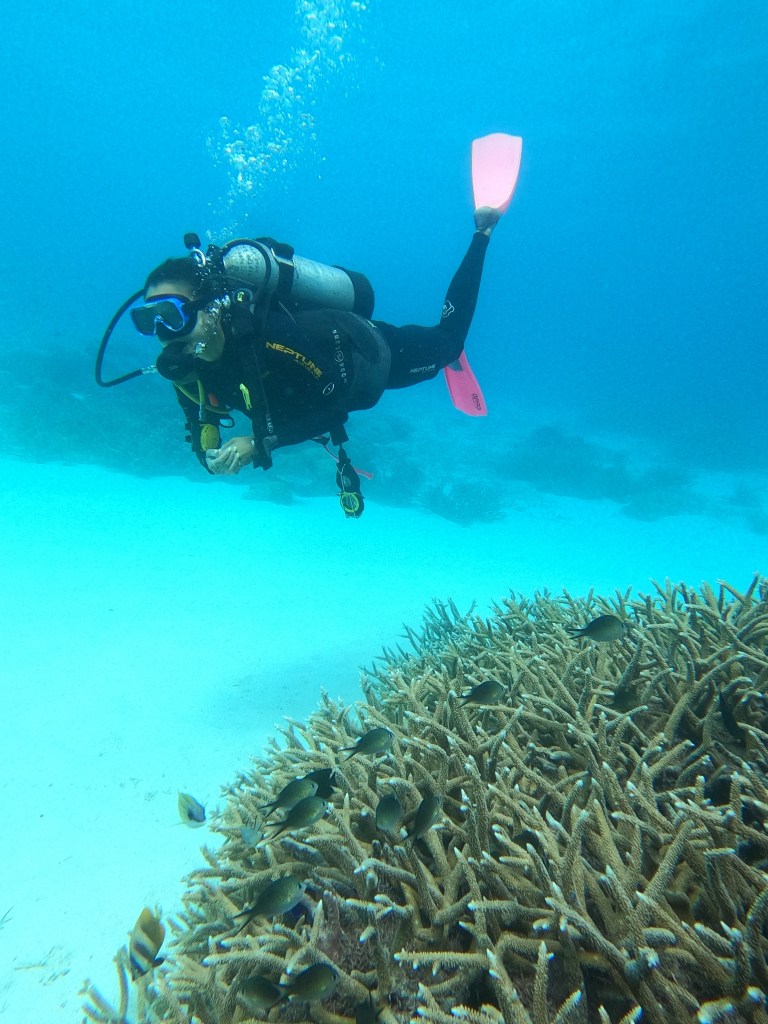
Tourism. Finally, over-exploitation during activities like scuba diving, snorkelling and even the infrastructure supporting tourism industries can negatively impact our beloved reefs, including freight or transport links (don’t get me started on those clumsy divers that faceplant reefbeds or the naughty tourists taking coral snippets – yeah that does happen). Damage from irresponsible tourism can be too much for reefs to tolerate alongside another very real threat as a tourism bi-product – invasive species. With the movement of our people this also presents a method to transport other organisms and bacteria (even if we’re totally innocent to the fact that we’re harbouring these fugitives). A current example are coral-eating sea snails which have proven very problematic in Australian reefs, such as Ningaloo (Wheeler, 2022). Invasive species are often able to have competitive advantage as those in the existing ecosystem have not evolved to meet their threat, and so they multiply quickly without having a predator to match them.*
*I saw this first hand with sea snails in the barrier reef. As I was diving, marine biologists literally had a large glass bottle and were snail hunting – pulling them off the corals and popping them in their jars like a coral reef easter egg hunt.
Wow, that really is 911 material. Is there hope yet for reefs?
Well, I’d love to say we have a defibrillator equivalent up our sleeves to help our struggling coral reefs, but there is no silver bullet. Any which way we proceed, it is almost certain that between 70-90% of reefs today will be no more in the next few decades due to unavoidable warming to come from our existing emissions (IPCC, 2018). But there are some interventions that can help prevent further coral fatality:
Bioengineering. Gene editing has been the focus of fairly recent experimentation in the marine conservation space (Barshis, 2013). Two questions needed answering to test this out: were there genetic differences that build coral tolerance to higher temperatures and, if so, could technology enable artificial insemination of such genetics? Well, when it comes to 1 fortunately the data is looking good. Iindeed, data revealed there are some phenological differences (12 gene differences, to be precise – Barshis, 2013) that unlock better ability to adapt to warmer climates, among those 12 genes that are responsible for immune response. And the second question has shown promising results too, albeit in proof of concepts that test whether genetically altered coral embryos could survive (they were altered in terms of their colouring and monitored over time to see if they were able to thrive, which they did! Cleves, 2018). So we know it’s possible to alter genetic coral make up, BUT of course it hasn’t been tested for high temperature tolerant coral editing specifically.
Marine protected areas. This one has received a bit of criticism in its helpfulness for coral, given long-term climate stressors don’t really care about ‘borders’, warming oceans are warming oceans, regardless if it has a metaphorical protected status around it or not. However, studies have shown that MPAs have been successful in increasing the chances of coral survival, protecting against those direct human threats and benefiting from ongoing scientific monitoring to check the ecosystem health and respond (like that snail hunting I mentioned earlier).
The big one – stop things getting warmer. Yep, it’s the proverbial ‘stop the leak by switching off the tap’ point. The source of many of the problems mentioned above in the climate threat space is through human-made greenhouse gas emissions – that nasty atmospheric injection of carbon, methane and more locking thermal radiation into our atmosphere like an invisible blanket (yep, my mind went to Harry Potter too with this one). But it really is an ultimate source of the coral crisis, so if we can reduce carbon PPM we can stop temperatures going even higher and slow down the ocean acidification rate. There’s a lot of interest in the scientific and private investment spheres regarding carbon capture technologies but these are yet to show real proof in the pudding. Until such a point, my money here is on good old fashioned natural solutions – trees and mangroves – fab carbon sinks. Regardless, we can stop the carbon PPM increasing by stopping emissions now – radical action is needed.
Wrapping up…
So as we surface again, what have we learned from this paddle through coral reefs and the challenges they face? Unfortunately, we know there are, with certainty, dark times ahead; we just won’t see the same abundance of coral reef cover as we do today, and we are already losing cover at a rapid speed. We know the fragile symbioses that are in place that enable reef ecosystems to thrive and why these are being thrown off through accelerated change in their marine environment as well as through one-off destructive events like fishing coral casualties or damage from infrastructure. And we also know that the impacts of that loss will be felt significantly by both marine and human life and so to thrive they and we must adapt to these impacts.
But…there is still a faint coral pulse, still the ability to ensure reefs do exist in the future and don’t become another dodo (with far larger repercussions). Perhaps that is unlocked through breakthroughs in our fantastic bioengineers, bolstering corals with new thermal capabilities, perhaps its through a miraculous reversal of carbon PPM in the atmosphere (you can tell I’m cynical about carbon capture tech, but you never know). Jokes aside, corals are extremely precious and, even in small coverage, support the life of many. So yes, life will need to adapt to the known part of the coral story that involves rapid loss, but the following chapter doesn’t need to spell extinction; our efforts to limit warming and eradicate direct human threats determines whether the story ends there, or continues on…
References:
- Ngoc, K.Q.T., ‘Assessing the value of coral reefs in the face of climate change: The evidence from Nha Trang Bay, Vietnam’, Ecosystem Services, 35 (2019), 99-108.
- IPCC, ‘Summary for Policymakers’, Global Warming of 1.5°C. An IPCC Special Report on the impacts of global warming of 1.5°C above pre-industrial levels and related global greenhouse gas emission pathways, in the context of strengthening the global response to the threat of climate change, sustainable development, and efforts to eradicate poverty (2018) pp. 3-24.
- OceanInfo – https://oceaninfo.com/compare/hard-coral-vs-soft-coral/
- NOAA, ‘Zooxanthellae – What’s that?’, Corals Tutorial, 2021. https://oceanservice.noaa.gov/education/tutorial_corals/coral02_zooxanthellae.html
- Radecker, N., Pogoreutz, C., ‘Why Are Coral Reefs Hotspots of Life in the Ocean?’, Frontiers (2019). Available at: https://kids.frontiersin.org/articles/10.3389/frym.2019.00143#:~:text=The%20nutrients%20corals%20release%20are,food%20web%20of%20the%20reef.
- Costa, H., Sprout, E., Teng, S., ‘Dead Zone’, National Geographic (2022).
- Wheeler, M, ‘The rise of coral-eating snails’, 2022 https://phys.org/news/2022-07-coral-eating-snails.html
- NOAA, ‘Anthropogenic (Human) Threats to Corals’, NOAA, https://oceanservice.noaa.gov/education/tutorial_corals/coral09_humanthreats.html#:~:text=Pollution%2C%20overfishing%2C%20destructive%20fishing%20practices,around%20the%20world%20every%20day.
- Cleves, P., Strader, M. A., Bay, L. K., Matz, M. K., ‘CRISPR/Cas9-mediated genome editing in a reef-building coral’, PNAS, 115 (20) 2018, pp. 5235-5240. Available at: https://scholar.google.com/scholar_url?url=https://www.pnas.org/doi/pdf/10.1073/pnas.1722151115&hl=en&sa=T&oi=ucasa&ct=ufr&ei=X8UDZPLNMpLSsQLGmbDgBA&scisig=AAGBfm2Iav8EEJMBjNK0Tg95i7azCfozlQ.
- Barshis, D.J., Ladner, J.T., Oliver, T.A., Seneca, F.O., Traylor-Knowles, N., Palumbi, S.R., ‘Genomic basis for coral resilience to climate change’, PNAS, 110 (4) 2013, pp. 1387-1392. Available at: www.pnas.org/cgi/doi/10.1073/pnas.1210224110.
 The Colour Green
Leave a comment