
“We are in reach of a whole new relationship with the ocean. A wiser, more sustainable relationship. The choice lies with us.”
David Attenborough, Earth Day 2022
As I write the final of this searies, it feels right to end with us, the people (and David Attenborough, obvs). Described as stewards of the planet, we face decisions on how best we live off of the land (and sea!) in ways that can be mutually beneficial, giving and taking in equal measure. Equipping ourselves with education is the best way in which we can do this to, we hope, make the right choice.
We rely on our oceans in a boat load of ways – economically, residentially, culturally and much much more. So you’ve got to be box of frogs crazy to think that ocean changes will stay within the coastal lines, with marine life as the only victims. Sea levels are rising dramatically year on year, biodiversity is rapidly declining and weather events (which we know are inextricably linked to our oceans) are going to continue to get more extreme and more likely (more info on these in posts 1 and 2 of this searies). This piece will break down some human impacts of these changes across a range of societal spheres and geographies, making it tangible how our oceans can become more and more of a threat to us as climate change effects continue and grow. I’ll end with an open discussion with you on how these effects are felt differently depending on vulnerability. There is a growing appreciation for how deeply socioeconomic factors feature. That is to say geographic exposure is one thing, but the institutional, social and economic actors take leading roles in the show.

Livelihoods
Oceans provide a basis of income for us around the world, whether it is directly through fishing or aqua-tourism (we all love a banana boat ride), or indirectly through agriculture and the crop variety that can be yielded through a farming friendly climate as a result of the ocean movements creating these conditions. However, all the below is set to experience disruption of varying degrees depending on location. Significant attention is required from governments to ensure the livelihoods of those affected don’t unravel into economic turmoil they can do little to escape.
- Fisheries. Generally, biomass decline in the warming oceans will lead to lower catch potential, particularly in the tropics, where projections of up to 40% reduction in catch has been forecasted (Marine Stewardship Council). On top of this, there is a growing likelihood for toxins to enter marine ecosystems as changes in oceanic conditions enable more toxic algaes to bloom. Disputes between ‘who fishes what where’ are already happening, as fish migrate to new homes in other geographies, a current example being the North East Atlantic Mackerel. All this spells instability in the sector, reducing food security and, of course, income.
- Tourism. There are several reasons tourism is at risk in certain areas: more extreme oceanic events discouraging tourists or making aqua sports too dangerous, declines in marine biodiversity wiping out diving hotspots, increased coastal erosion eating away popular beach destinations. With these examples and many others, tourism is set to take a hit. To bring this to life, the East Javan province Desa Gajahrejo has seen tourist numbers dwindle as their regular tidal wave events have become more extreme. Infrastructure here continues to be inadequate to ensure safety and evacuation procedures.
- Agriculture. Climate on land will be affected by changes at sea, fact. Depending on a particular El niño or La niña year, conditions may include more severe downpours or droughts, both wreaking havoc with soil moisture levels needed to produce a successful harvest. Increased likelihood of flooding will mean low lying agricultural areas close to coastal plains are at risk, and we haven’t even touched on storms folks. Of course this crop turbulence will lead to insufficient supply for livestock – previously, as a result of long drought periods farmers have had to send cattle to slaughter purely so there are less mouths to feed.

Infrastructure
Residential. It’s well documented that the increase in loss and damage figures from oceanic climate events is a combination of both the rising extremities of these as well as more infrastructure built in exposed areas, namely coastal. In the developed markets this comes in the form of more wealthy communities with coastal properties, whereas in the developing countries the opposite: inferior infrastructure as a result of poor communities inhabiting remote coastal regions. Coastal erosion increases with climate change, meaning the foundations of this infrastructure is on borrowed time. Also, with storm intensity likely at a peak on coasts (apart from rare brown ocean events – this is cool, check it out) the probability of these communities being displaced and losing property is high.
Governments must look carefully at long term plans to reduce economic risk and fatalities, like land-use regulations, coastal land buyout schemes and ocean defences. I stress the ‘careful’ part here; sadly there are instances in developing countries where defences (like sea walls) have been implemented inadequately (i.e. crap) and have lead to a false confidence to build infrastructure close to these, only for defences to fail and cause even greater damage.
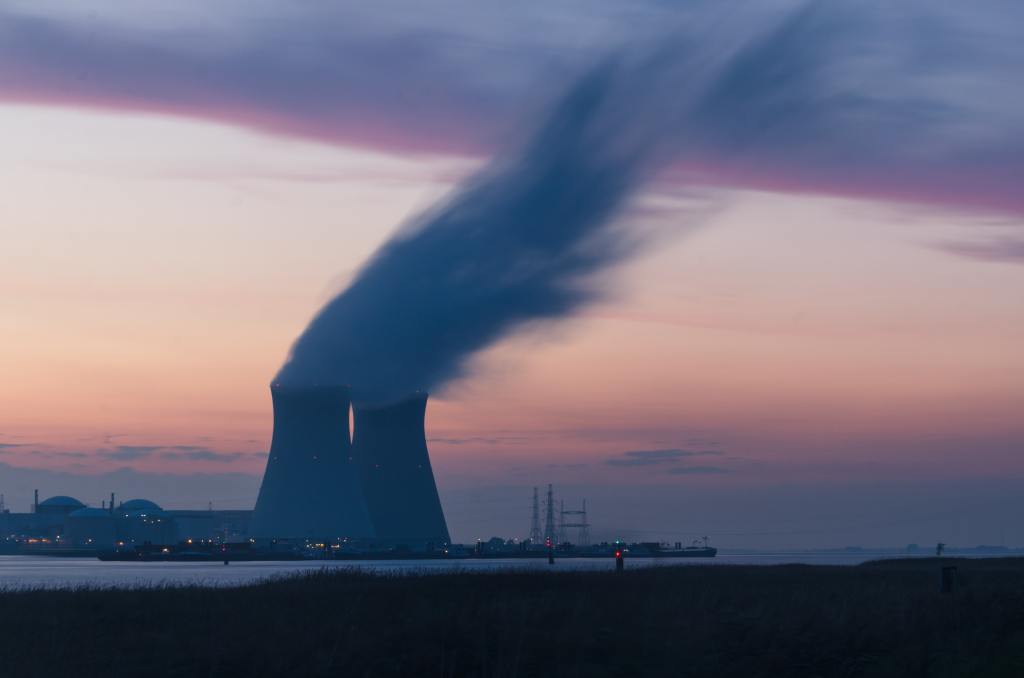
Critical national infrastructure. Here I’m referring mainly to transport and energy infrastructure. Train lines are likely to be located along the coast to avoid built up urban areas, as is the case significantly in the UK. Also, many energy sources are located along the coast. To give you an idea, 158 major oil/gas/LNG/tanker terminals are on the European coastal zone, and 71 operating nuclear reactors making up 37 % (Hanson et. al, 2014). Disruption to power lines and sources mean energy security is put at risk, in itself having huge consequences. But, when you think about nuclear reactors it’s not just energy security at risk. Nuclear sites tend to be located along the coast as reactors need to be continuously cooled. Without the sufficient energy to power these sites, they must be expertly switched off to avoid dangerous radiation leakage. Also, in the case of a flood, there is a risk that radioactive waste sediment that is located on site may be swept along and lead to…well you can guess there’s not a happy ending if this occurred.
The UK has three times as many energy coastal facilities compared to the European average. Luckily there are significant Shoreline Management Plans in place and the country is taking this into account in the design of nuclear sites as much as 80 years into the future. Things might not be so reassuring in other locations though and a country’s energy mix is guaranteed to be a pick n mix of other non-national energy sources. So, lightbulb moment, energy security is (for now) an accumulation of the global network risk.
The extremes
Apologies if my poor titling of this section sounds like a climate change band’s take on ‘the Supremes’ but I had no other way of describing this. Essentially what I’m alluding to are significant sea level rise and specific effects of oceanic events (tidal waves, tropical cyclones etc.).
Sinking lands. In 2013, The Intergovernmental Panel on Climate Change (IPCC) projected a 66% or greater likelihood that GMSL [Global Mean Sea Level] rise by 2100 will lie within the ranges of 28-61 cm, 36-71 cm or 52-98 cm for a low, medium or high GHG concentration (IPCC special report, 2013). The effects of this may seem far off into the future but, I assure you, some places are sinking fast. Due to icesheets melting in the Atlantic, the tropics are seeing significant sea level rise. Indonesia is reported to be at high risk, figures suggesting that some islands (East Java, Jakarta) will be 95% underwater by 2050. Not only are sea levels rising, but the land is actually subsiding too. This is because some urban areas were built on marshland, and it is literally sinking underneath the weight of the infrastructure. Areas particularly at risk here include New Orleans, Shanghai, Indonesia and Caribbean islands. The Alliance of Small Island States made some damning comments at COP27, as time runs out for them and they face astronomical economic losses and migration plans.
Extreme climate disasters. The probability of intense storms, floods and torrential rains increase with climate change, caused by changes in ocean conditions and subsequent weather patterns. When these strike, they prove deadly, Hurricane Katrina being a prime example that resulted in 1800 deaths (Irish et. al, 2014). The sad truth of the matter is that these are most likely to be felt in the tropics and Asia, where funds, resilient infrastructure and education to effectively respond to these disasters are all in short supply. The fall out of such impacts lead not only to the initial losses of the event directly, but the aftermath results: displacement and disease.
- Displacement: Take the Pakistan floods as the most pertinent current example, 8 million are currently without a home (these figures likely conservative) and, with recovery likely to take several months to years in total, living conditions in temporary humanitarian camps are poor. Sometimes displacement leads people to make dangerous journeys in search of new homes, often as a result of political factors.
- Disease: Risks of infectious spread is much higher through water after the climate event, particularly with the increased insects as super spreaders alongside this. Lack of access to hygienic drinking water will also exacerbate the risk, so even for those who survive the event, they face fatal conditions on the other side.
Wrapping up…
So, closing this searies out, there is a coming together of how ocean and marine life changes flow in waves towards us, the land dwellers. What I haven’t yet shared is that the oceans are actually still playing catch up with climate change. Put simply, air heats quicker than water, so atmospheric warming that has already happened has yet to be fully felt by our oceans…a worrying thought given all the points covered along our three part blog journey. Of course, some populations are more at risk of these impacts based purely on geography, but I would wholeheartedly argue education and climate actions will be the key differentiators. On a local scale, people armed with information on how they can reduce their risk will do so, like choosing to diversify their crops to cover the varying weather conditions or make longer term plans to reskill away from risky sectors. However, this should and must be supported by national scale efforts, like providing those educative or reskilling opportunities, introducing policies that will avoid economic losses and being smarter in the where and how of people, jobs and infrastructure.
Ultimately, it is these numerous decisions, as governments, consumers and corporations, that will help or hinder a sustainable oceanic partnership; oceans, marine life and us. We know we must adapt to the consequences of historic emissions, but we get to decide what happens next. What choices will you make? What will the ripples of those choices be?
References:
- Anon., ‘Climate Change and Fishing’, Marine Stewardship Council, 2022. Available here. Last accessed 8/12/22.
- Barange, M., Bahri, T., Beveridge, M.C.M., Cochrane, K.L., Funge-Smith, S., Poulain, F., ‘Impacts of climate change on fisheries and aquaculture’, Food and Agriculture Organisation of the United Nations (2018). Available here. Last accessed 7/12/22.
- Brown, S., S. Hanson and R.J. Nicholls ‘Implications of sea-level rise and extreme events around Europe: a review of coastal energy infrastructure’, Climatic Change 122(1-2) 2014, pp.81–95.
- R. Saravanan, ‘Is the weather actually becoming more extreme?’, Ted-Ed (2021), available here, last accessed 29/11/22.
- ‘Coastal Community Resilience Planning Toward Disaster: A Case Study on Coastal Area in Malang Regency, East Java, Indonesia’, IOP Conference Series Earth and Environmental Science 747(1) 2021.
- Irish, J. L., A. Sleath, M.A. Cialone, T.R. Knutson, and R.E. Jensen ‘Simulations of Hurricane Katrina (2005) under sea level and climate conditions for 1900’, Climatic Change 122(4) 2014, pp.635–649.
- Anon., ‘How is life in the sea affected by climate change?’ IPCC, special report on the ocean and cryosphere in a changing climate, (2016) available here, Last accessed 11/11/22
- Anon., ‘Brown Ocean Effect’, Met Office, 2022, available here. Last accessed 8/12/22.
- Wang, B., X. Luo, Y.M. Yang, W. Sun, M.A. Cane, W. Cai, S.W. Yeh and L. Liu ‘Historical change of El Niño properties sheds light on future changes of extreme El Niño’, Proceedings of the National Academy of Sciences 116(45) 2019, pp.22512–22517.
 The Colour Green
Leave a comment