‘Everyone has a plan, until they get punched in the mouth’
Mike Tyson
Although there is still much uncertainty surrounding the future impacts of climate change, there is no doubt that these impacts are already being felt globally and have been for a while. For the Brits amongst us, experts have said this Summer’s heatwaves are inextricably linked to climate change, and that they’ll be making more of an appearance and impact in future (much like my fine lines…). To what extent these events are experienced by different geographies, socio-economic profiles and cultural groups is a question of vulnerability.
I reflect on climate change vulnerability not in isolation, given this will never be the case, but alongside economic changes from globalisation too. It has to be said some lines of thought are exploratory and I definitely don’t want to disguise myself as an expert. Given some sensitive topics we’ll touch upon, please consider this blog as intending to provide the definitions of vulnerability and give examples of how this applies to potential ‘winners and losers’. Ultimately, I hope this opens up a dialogue on what it means to have an equitable climate change response, underpinned by fair policy and respect for the diverse paths in life, us, as humans, tread.
First things first: what is vulnerability?
This question sounds simple, but is actually still being debated. But let’s use The Intergovernmental Panel for Climate Change (IPCC) definition as our basis. It articulates vulnerability to be a function of exposure, sensitivity, and adaptability. I’m going to use an everyday example of ‘teeth’ to bring this to life (since sensitivity automatically takes my mind there):
Exposure is the interaction with a ‘stressor’, let’s say temperature in this analogy. How often is the sensitive tooth or teeth exposed to more extreme temperatures and what temperatures – the types of questions to ask when assessing vulnerability.
Sensitivity is the characteristics that make something more susceptible to the stressor. So (and I’m no dentist ok?) this could involve the enamel coverage, the nerve exposure or even hormone levels. For an environmental hazard like flooding for instance this could be the materials of a building or, when considering the human dimension, how old or mobile someone is.
Adaptability. How can the system respond to stressors ‘in order to initiate structural or functional change…and thereby achieve resilience’ (Bettini et al, 2015:48). In other words, how can the tooth change itself to be more resilient to these temperatures (otherwise called adaptive capacity). Of course this could be done in isolation, like repairing or growing new gum to cover the nerve, or with the help of an institution, like popping to your dentist.
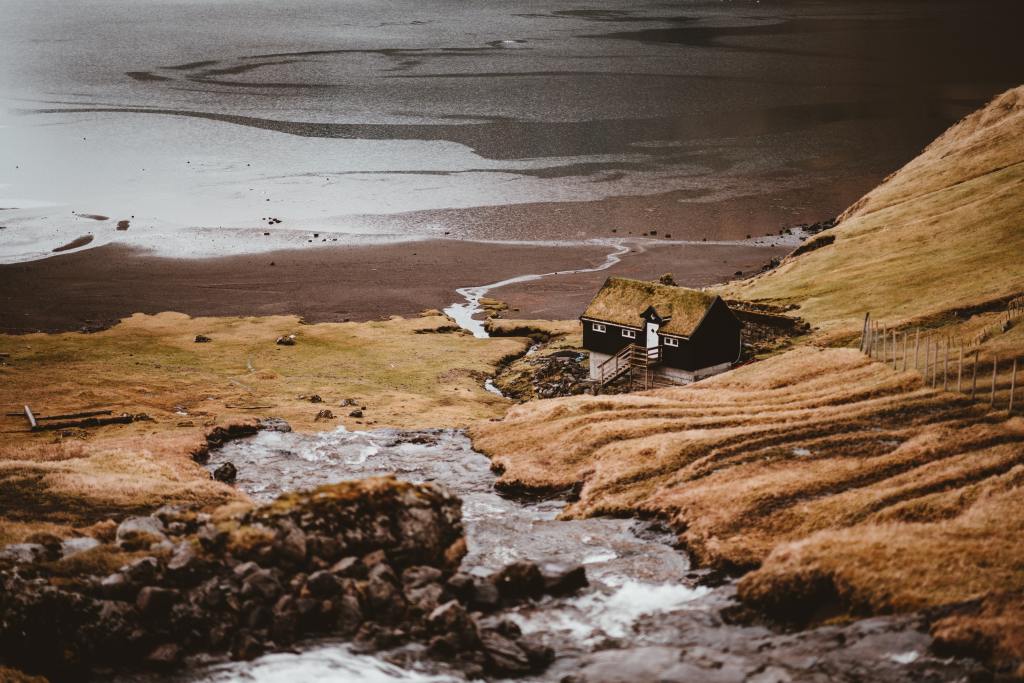
And this last point is important. Because vulnerability overall isn’t just a question of how a given thing (if you want the sciencey term here its ‘exposure unit’) responds to an environmental stressor, but its also what economic structures and mechanisms are in place to help. So, if you consider this on the scale of a societal group, these structures include social networks, government policies and access to funding amongst others. So, a more ‘contextual vulnerability’ take on things would look not at a linear forecasted impact of climate change (if a tooth has X characteristics and is exposed to Y temperatures, then it leads to Z outputs) but this in relation to the political, institutional, economic and social structures which frame the contextual space the change happens within. Therefore Z is dynamic. And, when we think about this context of large economic change and climate change, there may be ‘double’ winners or ‘double’ losers.
Eh? What’s this about double winners and losers?
Stemming from the ‘Double Exposure Framework’ (O’Brien & Leichenko, 2000) the concept here is that certain entities (be it a geography, social group, sector or ecosystem) may not only experience climate change effects, but of economic globalisation processes too. A ‘win’ is a perceived benefit from the change, so from globalisation this could be increased GDP or employment rates. For climate change like temperature increase, growth in agricultural productivity (yes, some countries will be able to grow more diverse crops) or reduced weather related costs (Lord knows how much chaos is caused on UK trainlines with the slightest pinch of snow). And the more controversial ‘loss’ category could involve higher inflation or reduced social services from economic downturns, or for climate change a loss of biodiversity or food and water security.
Of course, winners and losers shift over time, but I think this more holistic assessment of both climate and economic change to be an important one when we think of overall vulnerability and, indeed, what policymakers need to do about it.
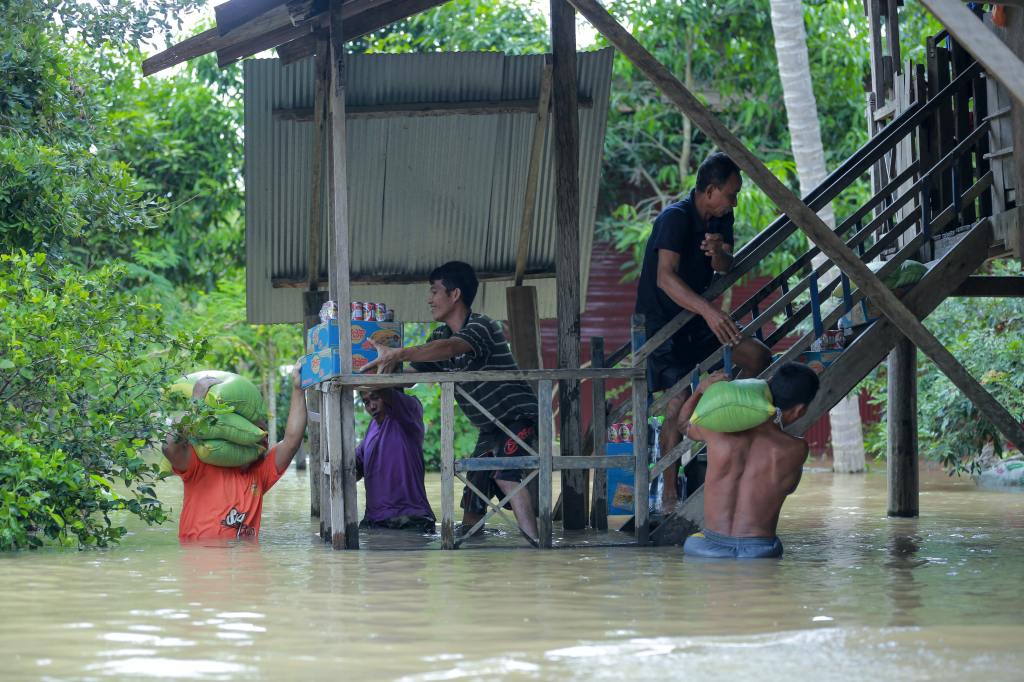
So, who are the most vulnerable then?
There are a fair few ways of looking at this, but I’ll tackle it by taking two different angles:
- National scale. It’s not a perfect index of methodology and dataset (alas what is?) but the ND-GAIN clearly points to a trend in developing countries as set to lose the most in relation to climate change, particularly within Africa, as being most vulnerable (the heat map is a really interesting look if you’ve got a spare minute). The index assesses both physical and socioeconomic variables when giving an overall rank, so if we applied the Double Exposure Framework here we’d likely find that African countries are likely to lose economically (examples like EACOP come to mind if this does not go ahead) as well as geographically (the famine in Madagascar caused by severe drought as a current tragedy).
- Local sub-group scale. I could and probably will write a whole blog for each of the below, but a broad brush view is that prevalent inequalities will be even more pronounced in the face of climate change:
- Women. Studies based on female led house-holds showed that it is women’s adaptive capacity that is much lower in comparison to that of men, including lower social support networks as they have reduced time available from household chores, and lacking access to government funds. The UN Foundation notes women face significant barriers in migration from caregiving roles, higher health risks and little decision-making power.
- The poor. Worryingly a lot of vulnerability assessments use GDP as a core indicator, but given the poor contribute little to this national figure, they are at risk of being written out of a country’s response to hit GDP targets. Those in extreme poverty tend to have instable household structures, little to no access to credit and largely inhabit more rural areas that won’t be well covered by emergency responses. They too have reduced social networks or ability to access key information to manage their climate change effects.
- Minorities. Studies on aboriginal culture points towards minority groups or sub-cultures not being considered when it comes to climate change actions. This requires a deeper understanding not just of livelihoods but of ideologies, cultural practices and rituals. National scale studies often do not understand these intricacies and so governments may ignore the needs of these groups in their climate change initiatives.

Wrapping up…
After understanding how vulnerability involves both the physical and social spaces of change, the effects and also the adaptive capacity, the important question to ask is what to do next armed with this info? The moves governments make now in terms of policy and investment are crucial, at the heart of whether an exposure unit will be able to adapt or not to climate change, and whether inequalities will be enhanced or reduced. The famous Tyson quote ‘everyone has a plan until they get punched in the mouth’ is a good one to reflect on I think – how a country, economy or person is vulnerable to that ‘punch’ is down to a wealth of factors we’ve discussed, not only down to the boxer but whoever is in their corner too.
Pssttt!! Watch out for my next blog where I’ll apply these concepts of vulnerability to industry and what companies can do to ‘win’!
References
- O’Brien, K., S. Eriksen, L.P. Nygaard and A.N.E. Schjolden ‘Why different interpretations of vulnerability matter in climate change discourses’ , Climate policy 7(1) 2007, pp.73–88.
- Balikoowa, K., G. Nabanoga, D.M. Tumusiime and M.S. Mbogga ‘ Gender differentiated vulnerability to climate change in Eastern Uganda’ , Climate and Development 11(10) 2019, pp.839–849.
- Pelling, M. and M. Garschagen ’Put equity first in climate adaptation’, Nature 569(7756) 2019, pp.327–329
- Ford, J.D., N. King, E.K. Galappaththi, T. Pearce, G. McDowell and S.L. Harper ‘The resilience of Indigenous Peoples to environmental change’ , One Earth 2(6) 2020, pp.532–543.
- Miller, F., H. Osbahr, E. Boyd, F. Thomalla, S. Bharwani, G. Ziervogel, B. Walker, J. Birkmann, S. Van der Leeuw, J. Rockström and J. Hinkel ‘Resilience and vulnerability: complementary or conflicting concepts?’, Ecology and Society 15(3) 2010, p.11.
- Carbo, G., ‘5 Facts about gender equality and climate change’, UN Foundations, 2022, Available at: https://unfoundation.org/blog/post/five-facts-about-gender-equality-and-climate-change/?gclid=Cj0KCQjw48OaBhDWARIsAMd966CAVqZq0kez5t6gEFfZE25_nBIqlSwX_L9BFFqmwthAl08a_fvUd2caAmlaEALw_wcB, Accessed 30/11/22.
- O’Brien, L.K., Leichenko, R. M., ‘Double exposure: assessing the impacts of climate change within the context of economic globalization’, Global Environmental Change 10 2000, pp.221-232.
- Rosane, O., ‘New Fossil Fuel Project would turn Uganda into Oil-producing country’, Eco Watch 2022, available at:https://www.ecowatch.com/uganda-oil-production.html (accessed: 30/10/22)
- Anon., ND GAIN notre Dame Global Adaptation Initiative, University of Notre Dame 2022, available at: https://gain.nd.edu/our-work/country-index/ (accessed: 30/10/22)
- Jacqueline McGlade, ‘Building resilience to climate change’, TedX 2017, available at: https://www.youtube.com/watch?v=rLaJFzUWsPM (accessed: 30/10/22)
 The Colour Green
Leave a comment